
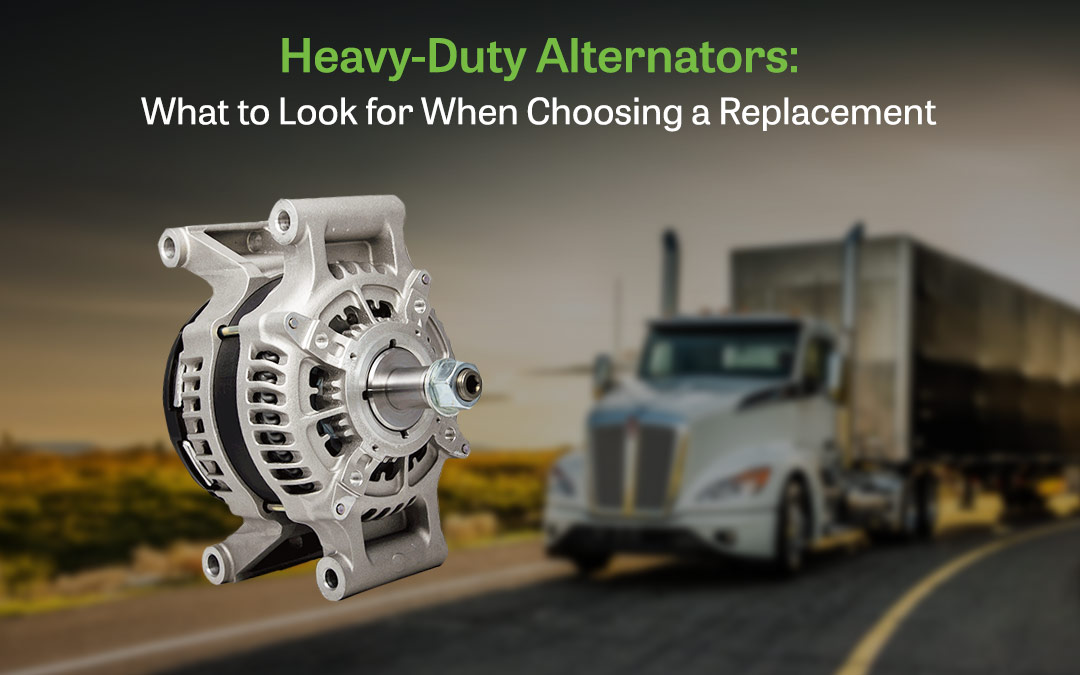
When a commercial truck or work vehicle depends on a reliable electrical system, the alternator plays an important role in keeping batteries charged and electrical components operating properly. Choosing the right replacement alternator is therefore about more than simply matching voltage and amperage. Application, mounting configuration, electrical requirements, fitment, efficiency, and long-term reliability all need to be considered.
For fleet operators, technicians, and truck owners, selecting the right heavy duty alternators can help support reliable vehicle operation while reducing unnecessary installation time and maintenance costs. This guide explains the key factors to consider when selecting a replacement alternator for a commercial or heavy-duty vehicle.
- Start With Vehicle and Application Compatibility
The first step when choosing an alternator replacement is confirming that the unit is compatible with the vehicle and its electrical system.
Commercial vehicles can have different alternator configurations depending on the truck model, engine, mounting arrangement, voltage, amperage requirements, and electrical architecture. Installing an alternator that does not match the vehicle’s requirements can lead to charging problems, installation difficulties, or reduced system performance.
Before purchasing a replacement, verify details such as:
- Vehicle year, make, and model
- Engine configuration
- System voltage
- Required amperage
- Mounting type
- Electrical connections
- Belt and pulley configuration
- Original or cross-reference part number
PowerEdge provides a convenient Find My Part tool that allows users to search by PowerEdge part number, competitor part number, or attributes. This can help narrow down compatible replacement options before installation.
- Consider the Alternator’s Output
Electrical demand is an important consideration when selecting a replacement alternator.
Today’s commercial vehicles can operate multiple electrical systems at the same time, including lighting, safety equipment, communication systems, climate-control components, onboard electronics, and other accessories. The alternator needs to provide sufficient output to support these demands while maintaining proper battery charging.
When comparing commercial vehicle alternators, look at both rated output and how the alternator performs under real-world operating conditions.
For example, PowerEdge 24PE alternators are designed to deliver high amperage at idle and cruise speeds. The product line also includes 28PE plug-in alternators designed for selected commercial vehicle applications.
Choosing an alternator based only on its maximum advertised output may not provide the complete picture. It is important to consider how the alternator performs at the engine speeds where the vehicle spends most of its operating time.
- Look at Efficiency
Efficiency is another important factor when comparing replacement alternators.
An efficient alternator can reduce the amount of engine power required to operate the charging system. This can be particularly relevant for commercial vehicles that operate for long hours and experience demanding duty cycles.
PowerEdge’s 170-amp alternators use Segment Conductor® square-wire technology on applicable models. The design provides a compact and lightweight configuration while supporting output capacity and durability.
When evaluating an aftermarket alternator, consider how its design balances electrical output, efficiency, cooling, and durability rather than focusing on a single specification.
- Check the Mounting Configuration
Physical fitment is just as important as electrical compatibility.
Heavy-duty vehicles can use different mounting configurations, including pad-mount and J180 arrangements. The replacement alternator must match the vehicle’s mounting requirements to ensure proper installation.
For example, the PowerEdge alternator range includes both 24PE and 28PE models with different mounting configurations. The product information provides application and fitment details to help identify the appropriate unit.
A proper fit can also reduce installation complications and unnecessary modifications. This is especially important for fleet maintenance teams where minimizing vehicle downtime is a priority.
- Consider Installation Requirements
Installation time can have a direct impact on maintenance costs and vehicle downtime.
When comparing replacement alternators, look at the connection type and whether the unit requires modifications to the existing wiring harness.
The PowerEdge 28PE plug-in alternator, for example, uses a plug-in wiring connection designed to eliminate cutting and splicing of the original equipment harness on applicable applications. This can help make installation faster and cleaner.
For technicians and fleet operators, features that simplify installation can be valuable when vehicles need to return to service quickly.
For additional installation documentation and product information, PowerEdge provides alternator product documentation and installation resources through its Downloads section.
- Aftermarket vs. OE Replacement Alternators
One of the common considerations when choosing an alternator is whether to purchase an aftermarket replacement or an original equipment unit.
An aftermarket replacement does not automatically mean compromising on quality. The important consideration is how the replacement is engineered, tested, and matched to the intended application.
PowerEdge alternators use OE technology adapted for aftermarket replacement and are designed for commercial vehicle applications. The current PowerEdge range includes 24PE and 28PE alternators, with 100% new units and no core charge.
For fleet operators comparing a heavy duty alternator vs OEM option, it is useful to look beyond the purchase price and evaluate:
- Application compatibility
- Electrical output
- Efficiency
- Installation requirements
- Construction and durability
- Warranty coverage
- Total cost of ownership
The right replacement can provide the required performance while also supporting maintenance and operating-cost objectives.
- Pay Attention to Warning Signs Before Replacement
Sometimes the vehicle itself provides clues that the alternator may need attention.
Common signs of a bad truck alternator can include:
- Battery warning lights
- Repeated battery discharge
- Dimming or fluctuating lights
- Electrical accessories behaving inconsistently
- Difficulty maintaining battery charge
- Abnormal alternator noise
- Charging-system voltage outside the expected range
However, these symptoms do not necessarily mean the alternator itself is the only problem. Batteries, wiring, connections, belts, and other components can also affect charging-system performance.
A proper diagnostic check should therefore be completed before replacing the alternator.
- Consider Warranty and Long-Term Value
Warranty coverage is another factor to consider when comparing replacement alternators.
PowerEdge currently provides a one-year/unlimited-mile warranty on its alternators. Warranty coverage can provide additional reassurance when evaluating replacement parts for commercial vehicles.
You can review the current PowerEdge warranty information for details and applicable terms.
It is also useful to consider the total cost of ownership rather than focusing only on the initial purchase price. A replacement alternator that combines appropriate fitment, reliable performance, efficient operation, and straightforward installation may provide greater value over the service life of the vehicle.
Choosing the Right Heavy-Duty Alternator
Selecting the right heavy duty alternators for a commercial vehicle requires a combination of technical and practical considerations. Vehicle compatibility, output, efficiency, mounting configuration, electrical connections, installation requirements, and warranty coverage should all be reviewed before making a replacement decision.
For fleet operators and technicians, the goal is not simply to find an alternator that fits. The goal is to identify a replacement that is properly matched to the vehicle’s application and electrical requirements.
PowerEdge offers heavy-duty alternators designed for commercial vehicle applications, including the 24PE and 28PE series. To identify the appropriate replacement, users can review the PowerEdge alternator range and use Find My Part to search by vehicle, part number, or other available criteria.
Choosing the right alternator at the beginning can help simplify installation, support reliable charging-system performance, and keep commercial vehicles operating efficiently.