
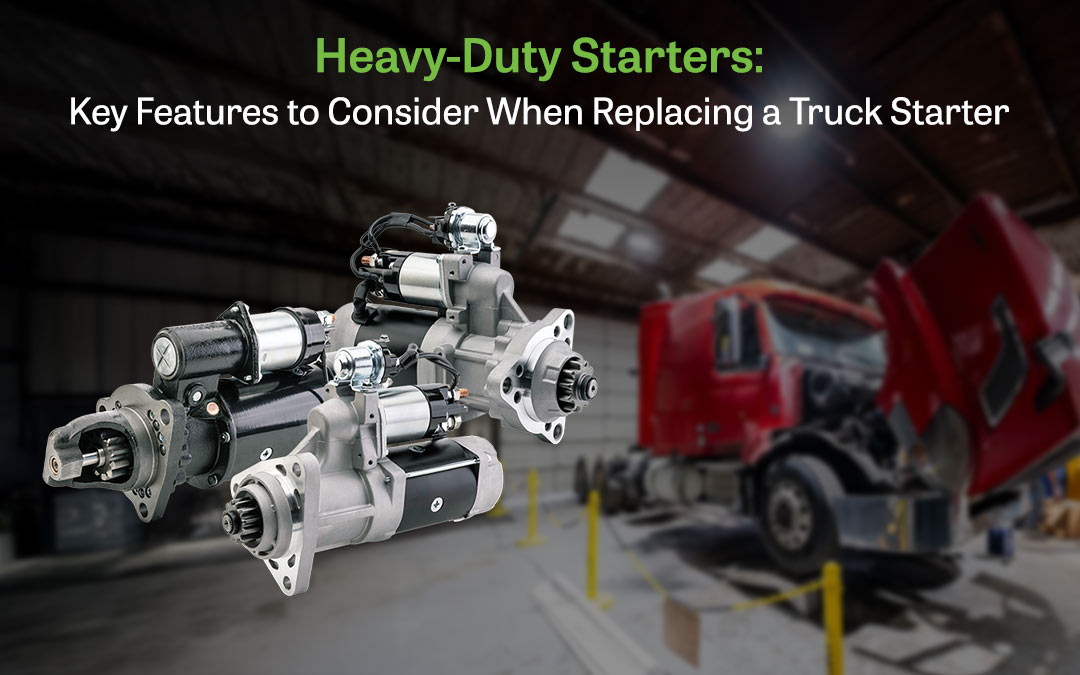
A reliable starter is essential for getting a commercial truck or heavy-duty vehicle on the road. When a starter begins to fail, the result can range from slow cranking and intermittent starting problems to complete vehicle downtime. For fleet operators and technicians, selecting the right replacement starter is therefore an important part of maintaining vehicle reliability.
When choosing heavy duty starters, it is important to look beyond basic fitment. Factors such as application compatibility, starting performance, voltage, gear reduction, protection features, installation requirements, and warranty coverage should all be considered.
This guide explains the key features to evaluate when replacing a starter for a heavy-duty or commercial vehicle.
- Confirm Vehicle and Application Compatibility
The first step in selecting a replacement starter is confirming that it is designed for the specific vehicle and engine application.
Heavy-duty trucks can use different starter configurations depending on the vehicle, engine displacement, voltage, mounting arrangement, and electrical system. A starter that appears physically similar may not necessarily be the correct replacement.
Before selecting a starter, verify:
- Vehicle year, make, and model
- Engine type and displacement
- System voltage
- Mounting configuration
- Starter rotation
- Pinion and gear configuration
- Original equipment or cross-reference part number
- Electrical connection requirements
PowerEdge provides a Find My Part tool that allows users to search using a PowerEdge part number, competitor part number, or attributes. This can help technicians and fleet operators identify compatible replacement parts more efficiently.
- Consider Starting Performance
A commercial truck starter must generate enough torque to crank the engine reliably, particularly under demanding operating conditions.
Heavy-duty diesel engines have higher compression and require significant cranking power. The starter therefore needs to provide sufficient torque while operating consistently under the conditions for which the vehicle was designed.
When evaluating truck starters, consider how the starter is engineered to handle the engine’s starting requirements rather than focusing only on its physical dimensions.
A properly matched starter can help provide consistent engine cranking and reduce the risk of repeated starting attempts that may place additional strain on the electrical system.
- Look for Gear-Reduction Technology
Gear reduction is an important feature in many modern heavy-duty starter designs.
A gear-reduction starter uses internal gearing to allow the starter motor to operate at a higher speed while delivering the torque required to crank the engine. This can provide strong cranking performance in a relatively compact design.
PowerEdge offers gear-reduction starters within its medium- and heavy-duty starter range, including the 38PE and 39PE models for applicable commercial vehicle applications.
For fleet maintenance teams, gear-reduction technology can be an important consideration when selecting a replacement starter for demanding heavy-duty applications.
- Check Voltage and Electrical Compatibility
The starter must also match the vehicle’s electrical system.
Using a starter with the wrong voltage or electrical configuration can result in starting problems or potential damage to the vehicle’s electrical components. Always verify the vehicle’s specifications and the replacement starter’s application information before installation.
This is particularly important for commercial vehicle starters, where different vehicles and applications can have different electrical requirements.
When replacing a starter, technicians should also inspect the battery, cables, terminals, and connections. A starter problem may sometimes be caused or worsened by poor electrical connections or insufficient battery power.
- Consider Protection Features
Heavy-duty starters can be exposed to demanding operating conditions, including repeated starting cycles and extended cranking.
Protection features can help reduce the risk of damage when the starter is subjected to excessive cranking conditions.
PowerEdge heavy-duty starters include Over Crank Protection on applicable models. This feature is designed to help protect the starter when excessive cranking occurs.
When comparing aftermarket starters, it is therefore useful to look at the protection features included in the design rather than evaluating products solely on price.
- Evaluate the Starter’s Switching System
The switching system is another component worth considering when selecting a replacement starter.
PowerEdge heavy-duty starters feature an Integral Magnetic Switch on applicable models. This design integrates the switching function into the starter assembly.
Features such as these can contribute to the overall design and functionality of a heavy-duty starter and should be considered alongside compatibility, starting performance, and installation requirements.
- New vs. Remanufactured Starters
Another consideration when replacing a starter is whether to purchase a new unit or a remanufactured one.
Remanufactured starters may be available at different price points, but buyers should consider what has been inspected, replaced, tested, and warranted as part of the remanufacturing process.
PowerEdge medium- and heavy-duty starters are offered as new units, providing an alternative to remanufactured starter options.
When comparing an aftermarket replacement, consider:
- Whether the unit is new or remanufactured
- Application compatibility
- Starting performance
- Internal components and construction
- Protection features
- Warranty coverage
- Availability and installation requirements
The lowest initial purchase price is not necessarily the only factor that determines the overall value of a replacement starter.
- Consider Installation and Fitment
A starter that is properly matched to the vehicle should also provide the appropriate physical and electrical fitment.
Before installation, technicians should verify the mounting configuration, electrical connections, gear and pinion specifications, and clearance requirements.
Using the correct replacement part can help reduce unnecessary modifications and installation delays. This is particularly important for commercial fleets where vehicle downtime can affect schedules and operating costs.
The PowerEdge Starters range provides product information for the available heavy-duty starter applications.
For additional product information and technical documentation, PowerEdge also provides resources through its Downloads section.
- Watch for Signs of Starter Problems
Recognizing early warning signs can help identify starter problems before they result in complete failure.
Common symptoms can include:
- Slow or weak engine cranking
- Clicking when attempting to start
- Intermittent starting
- Starter motor spinning without engaging
- Grinding or unusual starter noises
- Repeated need for jump-starting
- Complete failure to crank
However, these symptoms do not always indicate a defective starter. Battery condition, cables, terminals, grounds, and other electrical components can produce similar symptoms.
A proper starting-system diagnosis should therefore be performed before replacing the starter.
- Consider Warranty and Long-Term Value
Warranty coverage is another factor to evaluate when purchasing a replacement starter.
PowerEdge provides warranty coverage for its products, with applicable terms varying by product category. Before installation, review the current PowerEdge warranty information to understand the applicable coverage and conditions.
For commercial fleets, long-term value should also be considered. A replacement starter that provides appropriate application fitment, reliable starting performance, protection features, and suitable warranty coverage can help support the overall maintenance strategy.
Choosing the Right Heavy-Duty Starter
Replacing a truck starter involves more than finding a part that physically fits the vehicle. The replacement should be matched to the engine, electrical system, mounting configuration, and starting requirements.
When comparing medium- and heavy duty starters, consider:
- Vehicle and engine compatibility
- Starting torque and performance
- Gear-reduction technology
- Electrical and voltage requirements
- Protection features
- Switching system
- New versus remanufactured construction
- Installation and fitment
- Warranty coverage
PowerEdge offers medium- and heavy-duty starter solutions for applicable commercial vehicle applications, including the 38PE, 39PE, and 42PE starter models.
Fleet operators and technicians can review the PowerEdge starter range and use Find My Part to help identify the appropriate replacement for a specific vehicle or application.
Selecting the right starter can help support dependable engine starting, simplify maintenance, and reduce avoidable vehicle downtime.